Swiss German: The language you actually need
High German will get you through the door, but Swiss German runs the place.
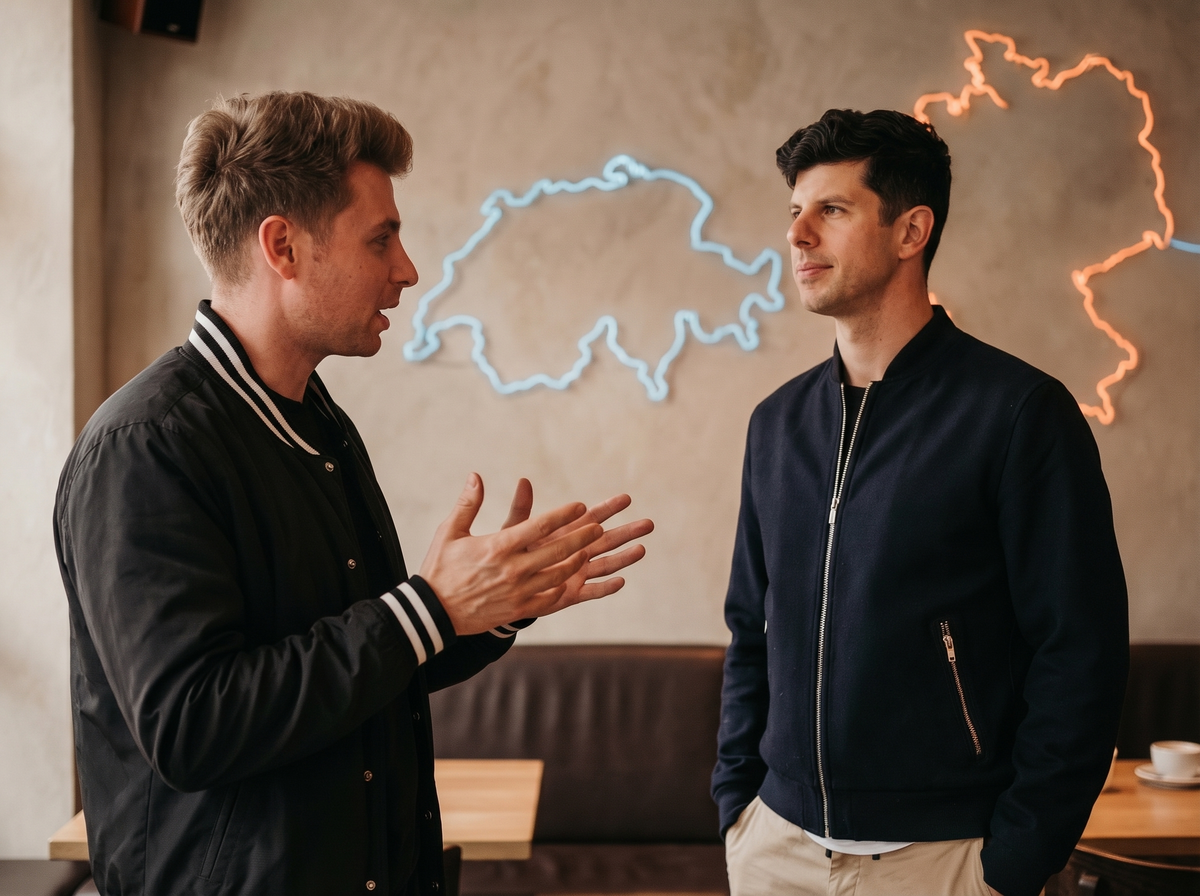
Most people who move to German-speaking Switzerland do the right thing. They sign up for a German language course. They download Duolingo or even invest in a proper Goethe-Institut program to pass a formal language exam. They learn grammar, build vocabulary, and practice their "Hochdeutsch". It's the standard German taught in schools, spoken on evening news broadcasts, and accepted in official settings across the German-speaking world.
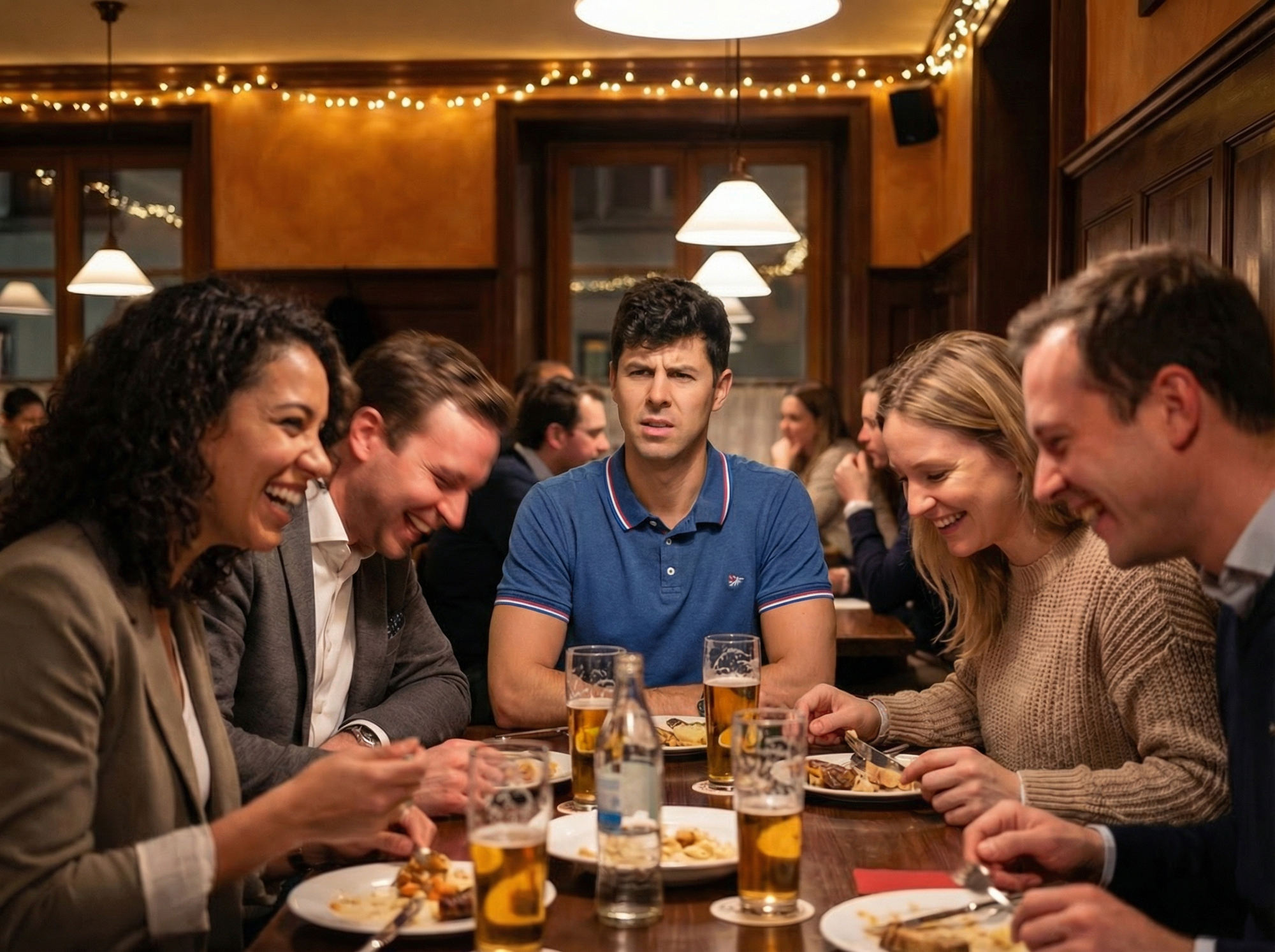
And then you realize how daily life here actually works. You join a colleague's birthday drinks after work, and the table erupts in laughter at a joke you couldn't follow. A team meeting that slips from High German into Swiss German the moment things get relaxed. You sign your kids up for a sports team and stand on the sideline smiling politely while every other parent chats freely around you.
Welcome to life in Swiss German.
High German gets you to the door, but Swiss German opens it
This is one of the most consistent things we hear from expats in German-speaking Switzerland. You feel confident in your formal German, and then daily life unfolds entirely in a language that sounds both familiar and completely foreign.
Swiss German is not simply a “version” of German. It is its own family of dialects with its own vocabulary, its own sounds, and its own rhythm.
Even German and Austrian expats (native German speakers) often spend their first few months quietly nodding along, understanding very little of the spoken Swiss German around them.
Swiss German has its own family of dialects, vocabulary, sounds, and rhythm. In German-speaking Switzerland, it is the default language for almost every situation that does not legally require a more formal language. Official legal proceedings, the evening news, court documents, and government correspondence happen in High German. Everything else? Swiss German is in charge.
To all the expats in the French and Italian-speaking parts of Switzerland, we didn't forget about you! But consider yourselves lucky to have many more resources available to help you learn the language. Swiss German is really a special challenge.
How Swiss German survived while German standardized
It's helpful to understand how things got this way. Swiss German belongs to the Alemannic branch of the Germanic languages, a group that once stretched across a large part of Central Europe. As Germany gradually standardized around what we know today as High German over the centuries (driven largely by the influence of Luther’s Bible translation and later the printing press), the diverse dialects across Germany slowly faded from everyday life. The standardized High German took over.
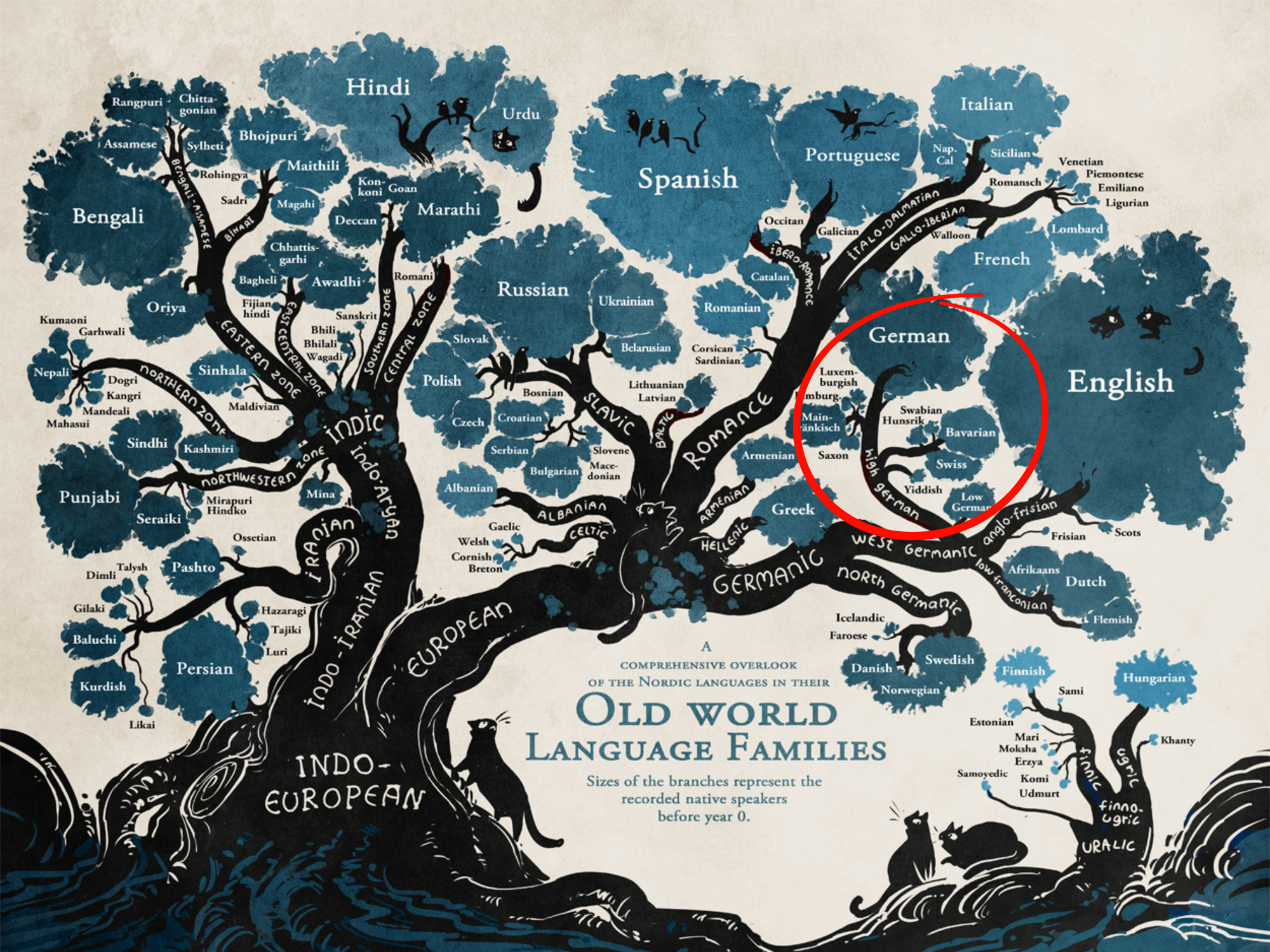
But Switzerland did its own thing and earned its own branch on the world language tree.
More geographically isolated by mountains. Politically independent from a very early stage. And deeply shaped by a national identity that valued its regional differences rather than ironing them out. Swiss communities had long developed their own dialect patterns from valley to valley, and there was never a strong enough political or cultural push to unify them. Switzerland, along with Liechtenstein and the Austrian state of Vorarlberg, is one of the few places in the German-speaking world where Alemannic dialects are used without restriction across virtually all situations of everyday life.
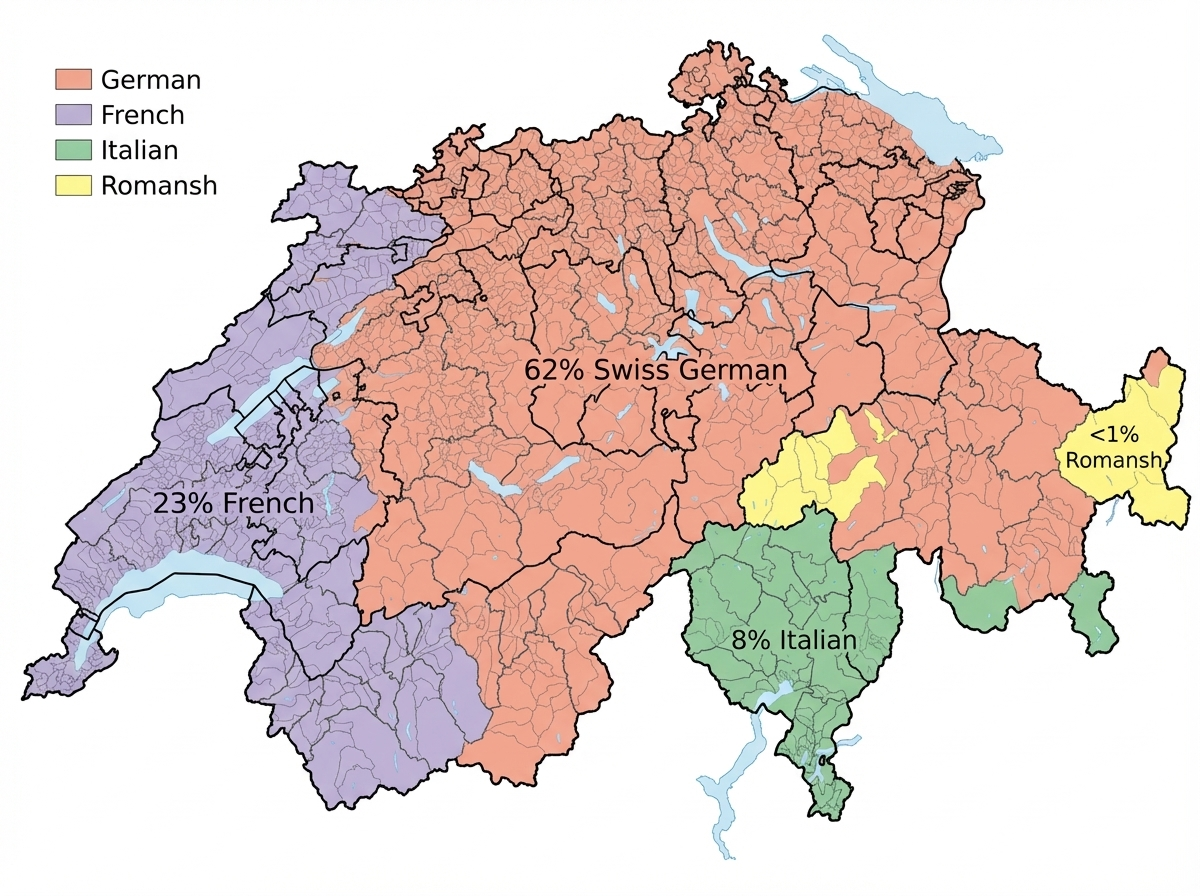
The result is that Swiss German became a point of cultural pride and identity. Today, around 66% of the Swiss population speaks (Swiss) German at home, compared to roughly 23% who speak French, 8% Italian, and 0.5% Romansh. German-speaking Switzerland is by far the dominant linguistic region, and at its core are various dialects of Swiss German.
Dozens of different dialects
What makes Swiss German genuinely unique (and for foreigners, genuinely challenging)? It is not standardized. There is no official spelling, no official grammar guide, and no widely agreed-upon pronunciation. Every region, and sometimes every town, has its own slightly adapted version.
The cadence, vocabulary, and sounds vary enormously depending on where in Switzerland you are. Some dialects (e.g., the Bernese Oberland or Graubünden) have a melodic, almost musical form. Many Swiss will tell you those are among the most beautiful to listen to. On the other end of the spectrum, dialects from Zurich, Thurgau, and St. Gallen tend to attract a bit of friendly criticism from the rest of the country. For example, the dialect spoken near Zürich (known as Züritüütsch) uses lots of (harsh) sounds from the back of the throat known by linguists as velar and uvular fricatives. You've probably already been warned about the best example word for this: Chuchichäschtli. But it should really be the least of your worries. It's the more common and simpler words where you will need emphasis from the throat (like chum or chaufe).
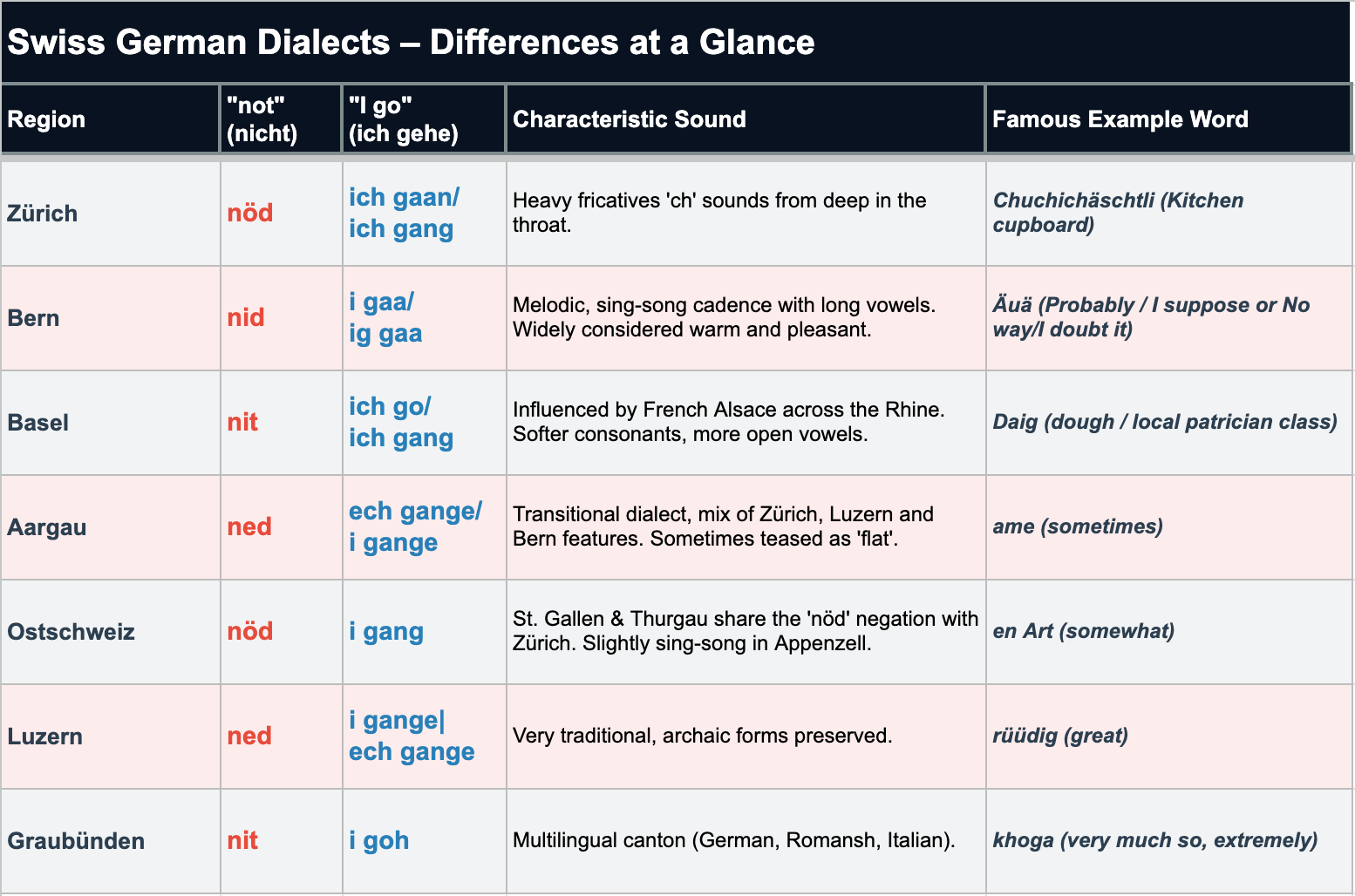
And then there is Walliser Deutsch: the dialect spoken in the canton of Valais. It is widely considered the most unique and most difficult Swiss German dialect, even for native Swiss German speakers from other parts of the country. Many Swiss freely admit they struggle to follow it.
Ask any Swiss German person which dialect they prefer and which ones they struggle with, and you will get a very confident and passionate answer. Every Swiss has a personal list. It is a bit of a national sport.
Why this matters for you as an expat
When expats realize that months of formal German study have not prepared them for what is actually being spoken around them every day, it can feel a bit demotivating. Almost like the Swiss have a secret language, and you were not invited to join the club.
Many expats we asked say Swiss German is one of the biggest barriers to feeling truly integrated and connected to Swiss life. Having moved to Luzern (and later Zurich) with just English and Spanish skills, I understand the struggle well.
What I can tell you from my own experience after learning both High German and Swiss German is this: the effort to learn Swiss German is worth it and changes everything (for the better).
When Swiss German became part of my daily life, the connections I was able to make with people deepened. The Swiss speak their truest, most relaxed selves in Swiss German. It is their first language and their home language. The High German they learn formally in school carries a certain formality with it, even in casual settings. Swiss German does not. It is warmer, a little cheeky, and much more personal.
Speaking High German in Switzerland is already a real accomplishment, and the Swiss genuinely respect the effort. But attempting Swiss German (even an imperfect, stumbling attempt) earns you even more respect and acceptance. Let's look next at how you can do it, too.
A confession: Swiss German is actually easier
I realize this might sound a little crazy if you already live in Switzerland and are battling to handle day-to-day life with all the different dialects of Swiss German you're straining to try and follow. But once I had a foundation in High German and started transitioning into Swiss German, I had a pretty wild realization: Swiss German is in many ways much easier to learn and speak.
The grammar is less rigid. Sentence structures repeat in predictable patterns. There is no simple past tense (the Präteritum that High German speakers use such as "Ich ging/I went"). Fewer verb tenses overall means fewer things to get wrong. The relative pronouns that cause so much confusion in High German – das, den, dem, deren, and so on – are almost entirely replaced by a single, flexible word in Swiss German: "wo". It works for almost everything, and that is a beautiful relief.
Even the articles are more forgiving. The way articles are pronounced in Swiss German tends to blur words together slightly, which means native speakers are less likely to notice if you get the gender wrong. In High German, a wrong gender is immediately obvious. In Swiss German, it is more likely to slip past unnoticed ("d" and "de" sound pretty similar).
And honestly? I think Swiss German is just more fun to speak. High German is precise and elegant. I appreciate that. But Swiss German has a lightness to it. Things feel less urgent, less formal, less serious.
Where to start
So how do you actually begin? Here are a few clear tips and useful resources to share from my own personal journey learning Swiss German:
PRO tip: The language you establish with someone early on tends to stick. If you have always spoken High German or English with your Swiss neighbor, switching to Swiss German later can feel strange for both of you. Make space for Swiss German as early as possible in new (especially informal) relationships
You can download the PDF version of the workbooks for free, or pay a small fee to order a printed copy by post. If you find it useful, they would genuinely appreciate a small donation! (A bank account number is provided on their website for transfers.) The site and web app can sometimes be a little hard to navigate, but remember that they offer and maintain all of this for free! So, offer to help them out if you're interested.
Wrap up
Swiss German is the language that most Swiss use to be themselves at work, at home, with friends, and with family. Making the effort to learn it, even imperfectly, signals something to the Swiss that relying on High German never quite can. It says: I am here, and I want to understand you. Not just your official language, but the real one.
My own Swiss German started to take shape largely because of Jvan. A huge thanks and shoutout to him for creating the space and encouragement for me to actually speak and not immediately switch into High German or English the moment I stumbled. The laughs we shared over my mistakes turned into good memories, and some of the most real connections I have made here came through grammatically questionable Swiss German chats. Getting over the pride and just going for it was the single biggest step I took.
This is the first of a series of articles on Swiss German. Next up: the fastest ways to start recognizing the dialect spoken around you, wherever in Switzerland you live.
Your turn to speak
Which dialect do you find hardest to follow? Tell us below! The Swiss reading this article will almost certainly disagree with each other. 👇


Comments ()